

Can a fruit endemic to the Canary Islands become a natural ally against cancer and other serious diseases?
A new scientific study suggests that it is. Opuntia dillenii (TINTO FIG®), an ancient plant of extraordinary nutritional and medicinal value, is gaining ground in cancer research thanks to its potent anti-angiogenic effects .
What is angiogenesis and why can stopping it save lives?
Angiogenesis is the process by which the body generates new blood vessels. It is essential in processes such as wound healing and embryonic development. However, when this vessel formation becomes uncontrolled and pathological , it can fuel tumors, promote metastasis, or worsen inflammatory and degenerative diseases such as:
-
Cancer
-
Diabetic retinopathy
-
Psoriasis
-
Arthritis
-
Atheromatous plaques
In this context, natural substances capable of selectively inhibiting pathological angiogenesis have become one of the main focuses of pharmacological and nutraceutical research.
The TINTO FIG® (Opuntia dillenii), under the microscope
In a study published by the Central European Journal of Biology , a group of scientists from the University of Cambridge and the University of Veterinary Sciences Lahore analyzed the effects of the aqueous extract of Opuntia dillenii (HIGO TINTO®) on angiogenesis using the chicken chorioallantoic membrane (CAM) model, an internationally recognized experimental model.
Key findings of the study :
-
The extract of HIGO TINTO® showed a strong inhibition of vascular development , in a dose-dependent manner.
-
A significant decrease (P<0.01) in the diameter and branching of primary, secondary, and tertiary blood vessels was observed.
-
3D imaging revealed a reduction in vascular topography and capillary volume .
-
The ectodermal tissue showed significant thinning , with less formation of capillary plexuses, and a structural alteration of the mesoderm and endoderm.
Why is this finding important?
Because this study positions Opuntia dillenii (TINTO FIG®) as a potential natural therapeutic agent , not only for its already known antioxidant and anti-inflammatory value, but also for its ability to modulate key processes in tumor progression .
This finding adds to other research where it has been observed that fruits of the Opuntia genus:
-
They stimulate apoptosis (programmed cell death) of tumor cells
-
They decrease the expression of vascular endothelial growth factor (VEGF) , which is involved in angiogenesis.
-
They act as immunomodulators , activating defensive cells and beneficial cytokines.
More than a superfood: A functional ally for your health
The RED FIG® has traditionally been valued for its effects on digestion, inflammation, and blood sugar. Today, modern science also highlights its:
-
Natural antiangiogenic agent
-
Powerful antioxidant
-
Immune modulator
-
A functional and safe alternative to more aggressive synthetic treatments
Its richness in flavonoids, bioactive polysaccharides and betalains makes the TINTO FIG® a natural source of nutraceutical compounds with real therapeutic potential .
How to incorporate FIGO TINTO® into your daily diet?
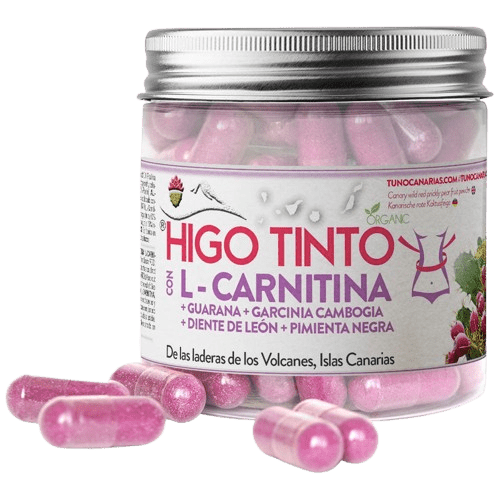
At TUNO CANARIAS we transform this extraordinary fruit into 100% natural, safe and functional products:
Organic RED FIG® Powder
HIGO TINTO® Family Max: a healthy alternative to sugary cocoa-based drinks
Digestive Creamer: prebiotic fiber + delicious taste
Memory Nexus: Advanced formula for focus and mind
A fruit from the Canary Islands, a world of possibilities
From the Canary Islands, FIGO TINTO® stands as a symbol of sustainability, health, and scientific innovation . With every spoonful, you not only care for your body, but you also choose to support a vision of the future where health is born from the earth and cultivated with knowledge.
Scientific references
-
Ejaz, S. et al. (2014). A novel link between angiogenesis and natural products: Anti-angiogenic effects of Opuntia dillenii. Central European Journal of Biology, 9(3), 298–308. DOI: 10.2478/s11535-013-0266-x
-
Zou, D. et al. (2005). Cactus pear: A natural product in cancer chemoprevention . Nutrition Journal, 4:25. DOI: 10.1186/1475-2891-4-25
-
Feugang, J.M. et al. (2010). Cactus pear extracts induce ROS and apoptosis in ovarian cancer cells . Nutrition and Cancer, 62(5), 692–699.