

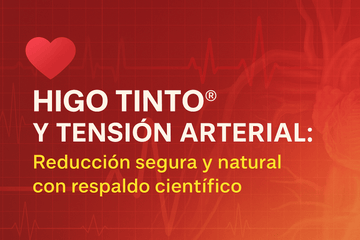
Can a natural extract effectively lower blood pressure without causing toxicity? A study says yes, and its star ingredient is the RED FIG®.
Research published in Biological & Pharmaceutical Bulletin (Japan, 2005) demonstrates that the methanolic extract of Opuntia dillenii cladodes (FIGO TINTO®) and its active compound, opuntioside-I , have a significant hypotensive effect , without causing mortality in laboratory animals, even at high doses. .
What was investigated?
The following were evaluated:
-
The effect on mean arterial pressure (MABP) in normotensive rats
-
Different routes of administration: oral, intraperitoneal (ip) and intravenous (iv)
-
Doses of up to 1000 mg/kg for the extract, and up to 900 mg/kg for opuntioside-I
-
Assessment of toxicity and changes in vital organs (liver, kidney, spleen, heart)
Key results: drop in blood pressure
-
The methanolic extract (OM) caused a 54% reduction in blood pressure at a dose of 10 mg/kg IV
-
Opuntioside-I , isolated as an opuntiol glucoside, showed similar effects:
-
44% reduction of MABP to 10 mg/kg IV
-
28% reduction by oral administration to 100 mg/kg
-
These effects lasted for several minutes and were comparable to acetylcholine , but with a longer duration and without immediate risk .
How does it work?
The action appears to be indirect cholinergic , similar to acetylcholine acting on muscarinic (M2) receptors. No effect was observed in animals pretreated with atropine, indicating that the action requires intact receptors and is probably related to endothelial vasodilation.
Safety and toxicity
Although no deaths were observed in rats or most mice at high doses, adverse effects were reported at high doses :
-
In IP 1000 mg/kg:
-
Hyperemia, ataxia, loss of balance, decreased motor activity
-
-
Histology:
-
Mild structural changes in the liver and spleen
-
One death in mice due to opuntioside-I at 100 mg/kg after several days
-
At low doses, the compounds were well tolerated , and the effect on blood pressure was clinically relevant without signs of serious toxicity. .
Structural side effects to monitor
-
Moderate liver alterations (vacuolation, focal necrosis) and splenomegaly were observed in some cases, especially at very high doses.
-
No abnormalities were found in the heart or kidneys.
These effects indicate that the substance should be used sparingly in long-term studies, and always at low effective levels .
How does this connect with the current application?
Although this study is experimental, its relevance to modern herbal medicine is clear. Today, many consumers seek natural formulas to support:
-
Stable blood pressure
-
Healthy circulation
-
Control of oxidative stress and vascular inflammation
Tuno Canarias has translated this knowledge into balanced products , which integrate TINTO FIG® extract with functional ingredients such as turmeric, prebiotic fiber or adaptogens.
Current formulas aligned with these findings
-
BOOST with FIG TINTO® : energy and metabolic support with turmeric, ginger and functional extracts
( https://tunocanarias.com/products/higo-tinto-boost ) -
Digestive Creamer : a gentle formula with RED FIG® and fiber, which naturally supports digestive and cardiovascular health
( https://tunocanarias.com/products/higo-tinto-digestive ) -
HIGO TINTO® Family Max : sugar-free antioxidant functional cocoa, ideal for the whole family
( https://tunocanarias.com/products/higo-tinto-family-max ) -
Pure powder of organic RED FIG® : ideal for those who wish to design custom formulas or plant-based capsules
( https://tunocanarias.com/products/higo-tinto-eco )
Conclusion
This study demonstrates that FIG TINTO®, through its extract and opuntioside-I, is a natural source of bioactive compounds with a real hypotensive effect . At appropriate doses, it is well tolerated, safe, and effective.
What began as traditional medicine has now found its place as a phytocomponent with proven clinical value.
Reference
Saleem et al. (2005)
Hypotensive Activity, Toxicology and Histopathology of Opuntioside-I and Methanolic Extract of Opuntia dillenii
Biological & Pharmaceutical Bulletin, Vol. 28(10): 1844–1851.