

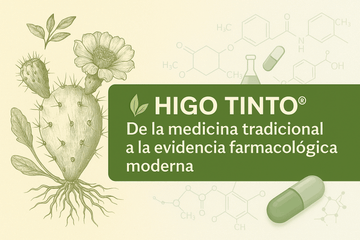
What if a hardy desert plant was actually a living pharmacy packed with active compounds for metabolic, liver, and cellular health?
A scientific review study compiled decades of research on the TINTO FIG® ( Opuntia dillenii ), revealing an extensive list of documented benefits: from its ability to reduce sugar and cholesterol to its neuroprotective, anti-inflammatory and liver-regenerating effects.
Notable phytochemical composition
More than 20 bioactive compounds have been isolated from cladodes, fruits, flowers and seeds, including:
-
Betanin and betacyanins (pigments with antioxidant action)
-
3-O-methylquercetin, kaempferol, isorhamnetin, quercetin (flavonoids)
-
Opuntiol and opuntioside I (glucoside with anti-inflammatory and vasodilatory effect)
-
Opuntisterol and opuntisteroside (sterols with hypocholesterolemic action)
-
Acidic polysaccharides ODP-Ia, Ib and II with antidiabetic and hepatoprotective effect
-
Volatile compounds such as phytol, caryophyllene, and spathulenol
Demonstrated pharmacological activities
Antidiabetic
-
Improves insulin sensitivity
-
It inhibits the intestinal absorption of glucose
-
It prevents kidney damage in the early stages of type 2 diabetes.
Antioxidant
-
Proven ability to scavenge DPPH, hydroxyl radicals and superoxide
-
Protects lipids, proteins and DNA from peroxidation
Hepatoprotective
-
Prevents CCl₄-induced liver damage
-
It regenerates liver tissue and normalizes ALT and AST enzymes.
Anti-inflammatory and analgesic
-
It inhibits mediators such as TNF-α, IL-6, prostaglandins, and leukotrienes.
-
Reduces carrageenan-induced edema and pain in hot plate test
Hypolipidemic
-
Improves total cholesterol, LDL and triglycerides
-
It raises HDL and improves the TG/HDL ratio
Immunomodulator
-
Increased production of antibodies (IgG, IgM) and T lymphocytes
-
It protects against drug-induced immunosuppression.
Hypotensive
-
Dose-dependent action through the compound opuntioside I
-
Effect comparable to acetylcholine but longer lasting
Antidepressant
-
Significant reduction of depressive behaviors in forced swimming models
-
Action attributed to flavonoids and terpenes present in the flowers
Traditional uses and cultural value
In India, the Canary Islands and Yemen, FIGO TINTO® has been used for:
-
Treats bronchitis, fever, gastritis, diabetes, and liver pain
-
Topical applications on abscesses, burns and inflamed eyes
-
Its juice has been used as a natural dye and in homemade cough syrups.
Current application in modern formulas
Based on this accumulated evidence, at Tuno Canarias we work to translate this ancestral and scientific knowledge into natural and practical formulas for everyday life:
-
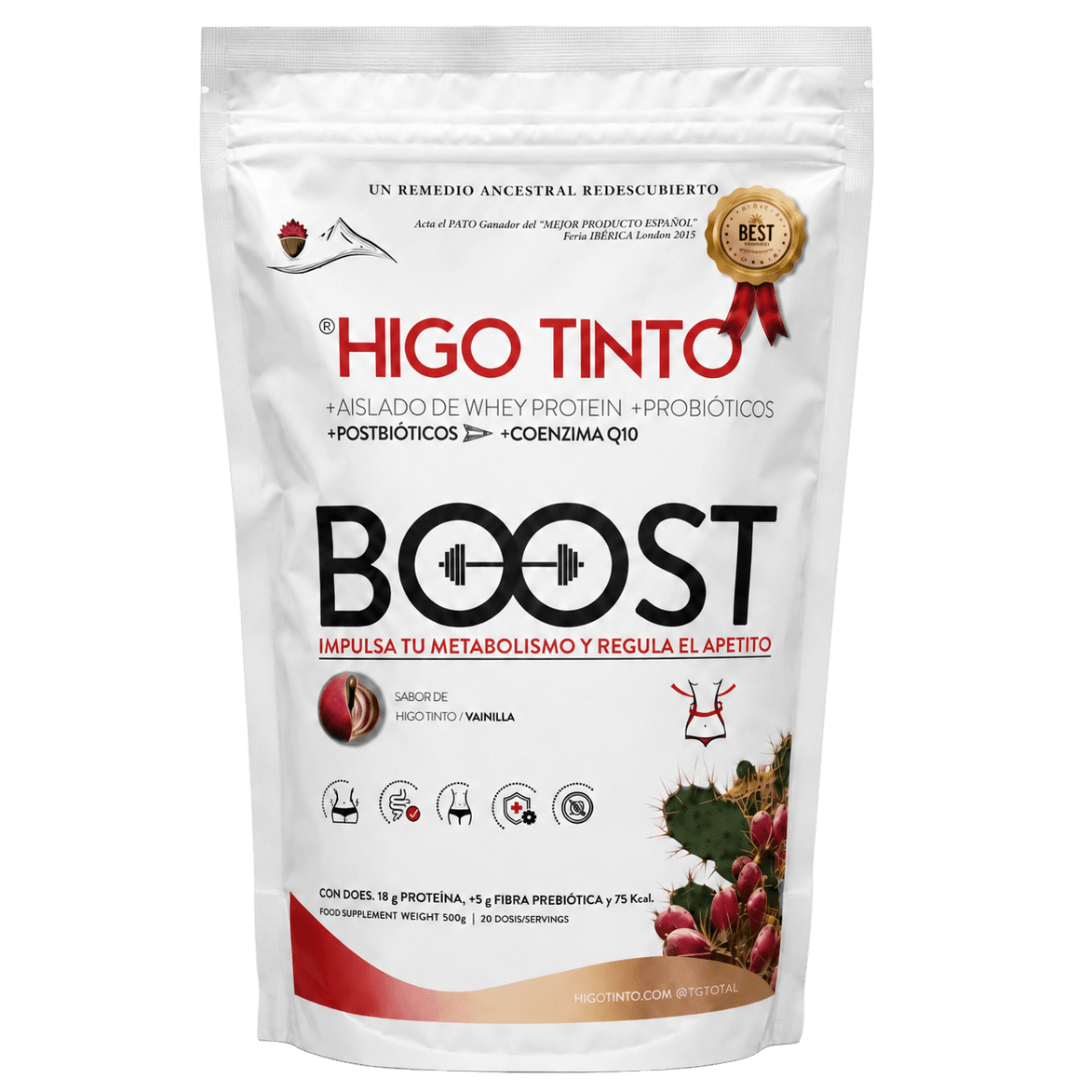
BOOST with FIG TINTO® – energy and antioxidant defense with ginger, turmeric and pure extract
-
Digestive Creamer – combination of prebiotic fiber and FIGO TINTO® for microbiota, metabolism and immunity
-
HIGO TINTO® Family Max – cocoa alternative with betalains and natural polysaccharides
-
100% organic TINTO FIG® powder – for capsules, smoothies or personalized formulas
Conclusion
The RED FIG® is more than just a hardy plant. It is a complex plant system with antioxidant, immunomodulatory, antidiabetic, anti-inflammatory, and regenerative compounds. This review positions it as a serious candidate in the development of modern phytotherapies.
Sometimes, the most advanced remedy is in a plant that grows where no one looks.
Reference
Raj, V., et al. (2015)
Plant Opuntia dillenii: A Review on Its Traditional Uses, Phytochemical and Pharmacological Properties
EC Pharmaceutical Science 1(1): 29–43